
Which Fun Dance Classes Are Right for Beginners?
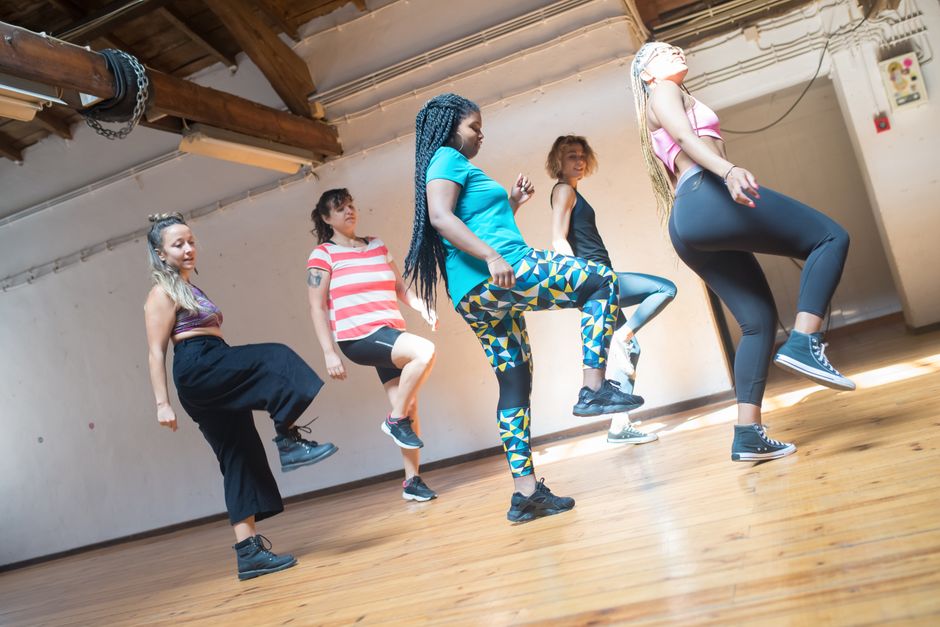
Fun dance classes for beginners usually fall into three useful choices: pop choreography for learning routines to familiar music, dance cardio for continuous movement, and partner dance for music and social interaction. The right fit depends on the pace and atmosphere you enjoy, not a requirement to arrive coordinated. Look for a class that teaches steps gradually, offers movement options, and explains what to expect before you book.
What is the most fun dance to learn as a beginner?
The most fun dance to learn as a beginner is the one whose music, pace, and social format make you want to return. There is no single style that is most enjoyable for everyone: a choreography class may suit someone who likes learning a sequence, while a social dance may appeal to someone who enjoys dancing with other people.
Think of the formats as different trade-offs rather than a ranking. Pop choreography puts attention on remembering steps and performing a routine. Dance cardio generally prioritizes keeping the body moving, while partner styles such as ballroom or salsa combine movement with coordination between dancers. A class can be enjoyable even when the steps take time to settle in.
| Format | What the class tends to emphasize | What to ask before booking |
|---|---|---|
| Pop choreography | Learning and repeating a sequence to music | Does the instructor break the routine into sections? |
| Dance cardio | Continuous movement and fitness-oriented pacing | Are lower-impact options or pauses offered? |
| Partner dance | Social dancing and coordinating steps with a partner | Are partners arranged, or can you come alone? |
University of Florida Health describes dance workouts as ranging from moderate to vigorous: ballroom dancing is generally moderate, while salsa or aerobic dance can be more vigorous. Those categories can help you compare pace, but they do not tell you exactly how a particular class will feel. The instructor, choreography, breaks, and your own movement all matter.
For a lower-pressure first choice, check whether the studio labels the class beginner-level and explains how instruction works. University of Florida Health also suggests asking whether you can observe a class if you are unsure about a style. Watching can answer practical questions that a class description cannot: how quickly steps change, how much space dancers have, and how the instructor responds when people lose the sequence.
What is the most popular dance class for adults?
There is no reliable popularity ranking in the research provided, so it would be misleading to name one adult dance class as the most popular. Adult beginners can instead compare formats by what happens in the room: learning choreography, moving continuously, or interacting with partners.
Availability also depends on the local studio and schedule. If a search for adult classes returns options such as pop choreography, dance cardio, salsa, ballroom, or line dancing, treat the class label as a starting point rather than a promise about pace or experience level. Read the description for explicit beginner instruction and contact the studio when important details are missing.
Social partner dance does not necessarily mean you must arrive with someone. University of Florida Health notes that many classes can arrange a partner, while tap and line dancing do not require one. Ask how a specific class handles partners, rotation, or solo participation, since arrangements can differ by studio.
Some adults prefer a format where each person follows the instructor rather than coordinating with a partner. Others like the shared structure of partner dance. Neither preference says anything about ability; it simply changes the learning curve and the kind of social interaction the class involves.
Can you lose weight by dancing 30 minutes a day?
Dancing for 30 minutes a day can contribute to physical activity and energy use, but it does not guarantee weight loss. Results depend on the intensity and duration of the dancing, body weight, food and drink intake, and the rest of a person's routine.
The CDC's physical-activity guidance says moderate-intensity dancing uses about 165 calories per 30 minutes for a 154-pound person; that estimate varies with body weight and activity intensity. It is an illustration, not a personal prediction or a fixed calorie count for every class. A slower session and a vigorous session should not be assumed to have the same energy cost.
The CDC says adults need at least 150 minutes of moderate-intensity aerobic activity per week, or 75 minutes of vigorous activity; 30 minutes a day on five days is one example of meeting the moderate target. Its adult activity guidelines also recommend muscle-strengthening activity on at least two days per week. Some activity is better than none, and the guideline can be accumulated in smaller portions across the week.
Activity helps increase energy use, but the CDC explains that weight loss generally requires a calorie deficit and that most weight loss comes from reducing calories. The amount of activity needed to maintain weight varies between people. A community line-dancing evaluation reported high enjoyment and found that about 80% of adult participants reached target heart rate during sessions, but it found no change in adiposity; that observational result does not show that dance caused weight or body-fat loss.
So a dance class can be a useful part of an activity routine, especially if its format is one you are willing to keep attending. It is more accurate to think of it as movement with possible fitness benefits than as a predictable weight-loss mechanism.
Do I need a partner or any experience to join a fun dance class?
You usually do not need previous dance experience, and needing a partner depends on the class. Start by checking that the class is explicitly intended for beginners; University of Florida Health recommends beginners start at a beginner level and notes that many classes can arrange a partner.
For partner dance, ask whether the studio pairs solo attendees, rotates partners, or expects people to bring someone. For a class that does not use partners, such as line dancing, the question is less relevant. The studio can clarify the format before you pay or make a trip.
At a first class, expect to learn through repetition rather than to master every step immediately. University of Florida Health notes that coordinating steps with music can take time. If you lose the sequence, return to the next step you recognize, watch the instructor, or pause briefly; keeping up perfectly is not a prerequisite for being in a beginner class.
Before booking, ask about more than skill level. If movement, balance, hearing, vision, or sensory conditions affect what would make the room accessible, ask what modifications are available, how loud the music is, and whether the instructor can explain or demonstrate movements in a way that works for you. Public information in the research sources does not establish what accommodations any particular studio provides, so confirm details directly with that studio.
Frequently Asked Questions
What should I wear and bring to my first dance class?
Wear comfortable clothing that allows you to move, and ask the studio what footwear suits its floor and format. Bring water and any items the studio says are needed; there is no need to arrive with dance shoes unless the class requires them.
How can I tell whether a class is welcoming and beginner-friendly?
Look for a clear beginner level, step-by-step teaching, and options to modify movements. Ask whether you can observe a class, how instructors handle missed steps, and what accommodations are available for access or sensory needs.
Are choreography, dance cardio, or salsa classes more fun for beginners?
There is no universal answer: choreography emphasizes learning a routine, dance cardio emphasizes sustained movement, and salsa adds partner or group interaction. Salsa and aerobic dance can be more vigorous than ballroom dancing, so consider both your preferred social setting and pace.
Sources
- Centers for Disease Control and Prevention, Physical Activity
- Centers for Disease Control and Prevention, Adult Activity Guidelines
- University of Florida Health, Dance Your Way to Fitness
- Schroeder et al., Journal of Pediatric Nursing (via PubMed Central)
Disclaimer: This article is for general information only and is not medical advice. It is not a substitute for diagnosis or treatment by a qualified healthcare professional. Always speak to your doctor before acting on anything you read here.
You may also like
Where Can I Find Fun Dance Classes for Adults?
Fun dance classes for adults in Philadelphia include drop-ins, beginner-friendly movement, studio styles, and community Zumba.
How Can I Strengthen Legs for Running?
Strengthen legs for running with progressive resistance, complementary hills or strides, and sessions scheduled around recovery.
How Can You Strengthen Legs After 60?
Strengthen legs after 60 with controlled home exercises, gradual progression, and a routine matched to your current ability.
How Can You Strengthen Legs With Bad Knees?
Strengthen legs with bad knees using supported, low-impact movements, gradual progression, symptom checks, and timely clinical advice.