
How Does a TikTok Influencer Agency Work?
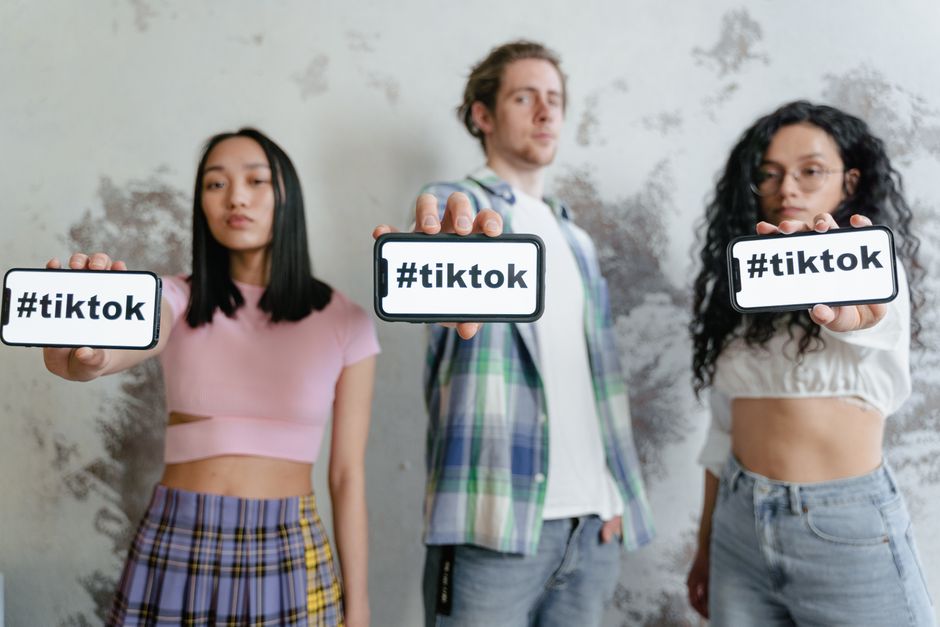
A TikTok influencer agency connects brands with creators and may handle strategy, casting, negotiations, campaign management, reporting, or creator representation. Brands should compare the agency fee, creator payments, and ad spend as separate costs. Creators should verify the agency, protect account access, review commissions and usage rights, and never assume TikTok pays a fixed amount per 1,000 views.
How much does a TikTok influencer agency cost for a brand?
A TikTok influencer agency costs whatever the contract assigns to agency services, creator compensation, and media or ad spending, so compare those three totals separately. The provided industry research does not establish a universal dollar price or standard commission. That is useful information in itself: a quoted “campaign price” is incomplete until you know what is included.
Agency pricing commonly needs to be understood as a structure rather than a single number. Ask whether the proposal uses a fixed retainer, a campaign fee, a percentage of creator or media spend, performance-based compensation, or a combination. The IAB and Advertiser Perceptions report says approximately three in four brands use flat-fee payments for direct creator partnerships, while performance-based and retainer models are each used by about 49% and 48% of respondents.
That mix means the old approach—comparing only the agency’s headline fee—is backwards. Build a simple cost sheet with these lines:
| Cost line | Question to ask | Why it matters |
|---|---|---|
| Agency service fee | Is it fixed, recurring, percentage-based, or performance-based? | Shows what the intermediary earns. |
| Creator payment | What does each creator receive for the agreed deliverables? | Separates talent compensation from agency work. |
| Ad spend | Is paid distribution included or billed separately? | Prevents media costs from being mistaken for creator fees. |
| Rights and extras | Are Spark Ads, whitelisting, revisions, exclusivity, or rush work included? | Clarifies what the brand can use and for how long. |
The market is large enough that measurement deserves its own line item. The IAB report projects U.S. creator-economy advertising spend at $37.1 billion in 2025, up from $29.5 billion in 2024, while identifying creator selection and return-on-investment proof as major challenges. Require reporting that connects the campaign objective to results, and ask whether the agency uses platform reporting, first-party analytics, or creator-provided data. The report says creator-provided reporting is used by 39% of surveyed brands, so the source of the numbers should be explicit.
How do I know whether a TikTok influencer agency is legitimate?
You know a TikTok influencer agency is more credible when it can explain its legal identity, services, payment route, creator relationships, reporting process, and exit terms in writing. A polished profile is not proof of legitimacy; a verifiable operating process is the useful test.
Start with the invitation itself. Be cautious with unsolicited direct messages that create urgency, promise guaranteed income, request payment before explaining services, or ask for broad account control. Ask for a company name, written agreement, business contact details, commission terms, and a clear description of who pays whom. Do not treat TikTok branding in a message as independent verification.
Separate the kinds of businesses commonly called an agency. A brand-side influencer agency plans campaigns and sources creators for marketers. A creator talent manager represents selected creators and may negotiate opportunities. A TikTok LIVE Creator Network supports livestream creators through operational programs. A TikTok Shop affiliate partner may focus on product promotion and affiliate activity. These roles can overlap, but the contract should say which service you are buying.
TikTok describes Creator Networks as business partners that connect LIVE creators with operational support, training, analytics, growth programs, and monetization opportunities. Its official TikTok LIVE Creator Networks page says LIVE Backstage can track Diamonds, active hours, viewer engagement, contracts, monthly bonuses, and payouts. That gives a legitimate network a concrete operational explanation to provide. It does not make every third-party invitation legitimate.
- Request the full contract before granting access or paying anything.
- Confirm the commission, deductions, payment date, cancellation rule, and exit clause.
- Limit permissions to the work being purchased; never share more credentials than necessary.
- Keep copies of invoices, approval messages, deliverables, and payment records.
- Check that disclosure responsibilities are assigned to both the brand and creator.
The Federal Trade Commission says a material connection can include payment, free products, or a business relationship. It must be disclosed clearly and conspicuously, and the responsibility applies to marketers and endorsers. A credible agency should make that requirement part of campaign workflow instead of treating disclosure as an afterthought.
How do I get into a TikTok agency as a creator?
You get into a TikTok agency as a creator by choosing the agency type that matches your work, presenting verifiable performance data, and accepting only terms you can evaluate. There is no single source-backed follower threshold for agency representation, so the strongest application is organized evidence rather than a large vanity number.
Prepare a short creator profile covering your content category, audience location if available, recent median views, typical engagement, posting format, LIVE activity when relevant, prior deliverables, and contact information. Use median views—the middle result across a defined group of recent posts—alongside follower count. The median reduces the chance that one unusually viral post makes the account look stronger than its normal reach.
Follower count still describes audience size, but it does not establish typical post performance. A creator with fewer followers can outperform a larger account when the smaller account has stronger typical reach, audience fit, or engagement. Ask the agency which period and which posts it used to calculate performance. Do not submit a screenshot of one successful video as the entire business case.
Then match the pitch to the service:
- Brand campaigns: show reliable deliverables, audience fit, disclosure discipline, and examples of clear sponsored content.
- Talent management: ask what negotiations, opportunities, and administration the manager actually handles.
- LIVE networks: show livestream consistency and ask how training, analytics, contracts, bonuses, and payouts are managed.
- Affiliate work: clarify product selection, tracking, commission calculation, returns, and payment timing.
TikTok’s Creator Rewards rules are separate from agency admission. The Creator Rewards Program Terms state that eligible creators must be at least 18, have at least 10,000 authentic followers, and have at least 100,000 authentic video views in the previous 30 days, along with a linked digital payment account registered in the creator’s own name. Those requirements concern TikTok’s program, not a universal agency standard.
Which agency is best for TikTok creators?
The best agency for TikTok creators is the one whose service matches the creator’s main revenue activity and whose contract makes payment, control, rights, and performance support clear. A brand campaign agency is not automatically the best choice for a livestream creator, and a LIVE network is not automatically a talent manager.
Compare agencies using the same questions. What type of creator does it accept? Does it provide introductions, negotiation, content guidance, LIVE operations, analytics, moderation, or only access to opportunities? Who owns the content? Can the agency reuse the creator’s image, voice, username, or videos? Does the agency need account access, and how is that access removed?
Usage rights deserve special attention. A creator can agree to make a video without giving a brand unlimited permission to reuse it. The contract should identify the platforms, duration, geographic scope, paid advertising permissions, edits, exclusivity, and approval process. Spark Ads or whitelisting permissions should be written separately when they are part of the deal, because paid use can create obligations beyond the original post.
Disclosure is another quality test. The FTC guidance says disclosures should be easy for consumers to notice and understand, rather than hidden after a “more” link or among numerous hashtags and links. Ask the agency for the exact disclosure workflow before accepting a campaign. Systems beat memory here: assign who checks the caption, video, LIVE description, and final approval.
For LIVE creators, TikTok says networks can offer operational support and access to LIVE Backstage tools. Its published process for establishing a Creator Network includes incorporation or registration information, shareholding details, and key management and personnel information. That level of operational detail is more meaningful than a vague promise of “exclusive access.”
What percentage do TikTok influencer agencies take?
The percentage a TikTok influencer agency takes is determined by the individual agreement; the provided sources do not establish a universal industry percentage. Treat any quoted percentage as only one part of the economics, because the same rate can produce very different outcomes depending on which payments it applies to and what work the agency performs.
Write the calculation in plain language. Does the commission apply to brand payments, creator fees, affiliate revenue, LIVE bonuses, or only opportunities sourced by the agency? Is it calculated before or after taxes, refunds, production expenses, ad spend, or platform deductions? When does the creator get paid? Who receives the brand’s money first, and what statement shows the deductions?
For brands, request a total-cost example using the proposed campaign rather than accepting an unexplained percentage. For creators, request a payment statement that lists gross income, agency deduction, other deductions, and net payment. If the contract cannot show the arithmetic, the commercial terms are not ready to sign.
Also keep agency commissions separate from TikTok’s own monetization rules. TikTok says Creator Rewards are determined at its discretion using legitimate views and other popularity signals; it does not promise a fixed amount per 1,000 views. Payments are redeemable on the 15th of each month when the payable amount reaches the stated $50 minimum threshold, subject to the program terms. An agency cannot turn that variable platform system into a guaranteed rate simply by describing it confidently.
Frequently Asked Questions
What should a TikTok agency contract include?
A TikTok agency contract should identify the parties, services, fees, payment timing, deliverables, approval process, content ownership, usage rights, disclosure duties, account permissions, cancellation terms, and exit process. It should also state who receives brand payments and whether the agency can deduct commissions before paying the creator.
Does TikTok pay $1 per 1,000 views?
No fixed $1-per-1,000-views rate is promised in TikTok’s Creator Rewards Program Terms. TikTok says rewards are determined at its discretion using legitimate views and other popularity signals, and eligible creators need a linked payment account in their own name.
Can a TikTok agency access my account or take my earnings?
An agency should only receive the access needed for the agreed service, and the contract should explain exactly what it can do. It should not control earnings or payment accounts without clear written authorization, payment records, and an exit process that lets the creator recover access.
Are free TikTok agencies really free?
Free to join does not necessarily mean free overall. A network or agency may earn through commissions, campaign deductions, or other terms, so review the contract, payment route, percentage, and services before accepting an invitation.
How can a brand tell whether an agency's creator results are genuine?
Ask for campaign-level evidence such as platform reporting, first-party analytics, creator-level median views, engagement data, deliverables, and permission to verify the underlying results. Compare those records with the agency’s claims rather than relying on follower totals or selected viral posts.
Sources
You may also like

How Does Medicare Advantage Work in Puerto Rico?
Medicare Advantage in Puerto Rico depends on the plan’s service area and network; moving outside it gives you a Special Enrollment Period.

How Do I Represent Myself in Child Support Mediation?
Prepare for child support mediation with the right records, a clear view of guideline calculations, and an understanding of what may happen if talks stall.
Can I Challenge Legal Paternity and Child Support?
Learn how challenging a paternity acknowledgment differs from contesting a child support order, including deadlines, DNA evidence, and ongoing obligations.