
How to Become a Hospital Chaplain
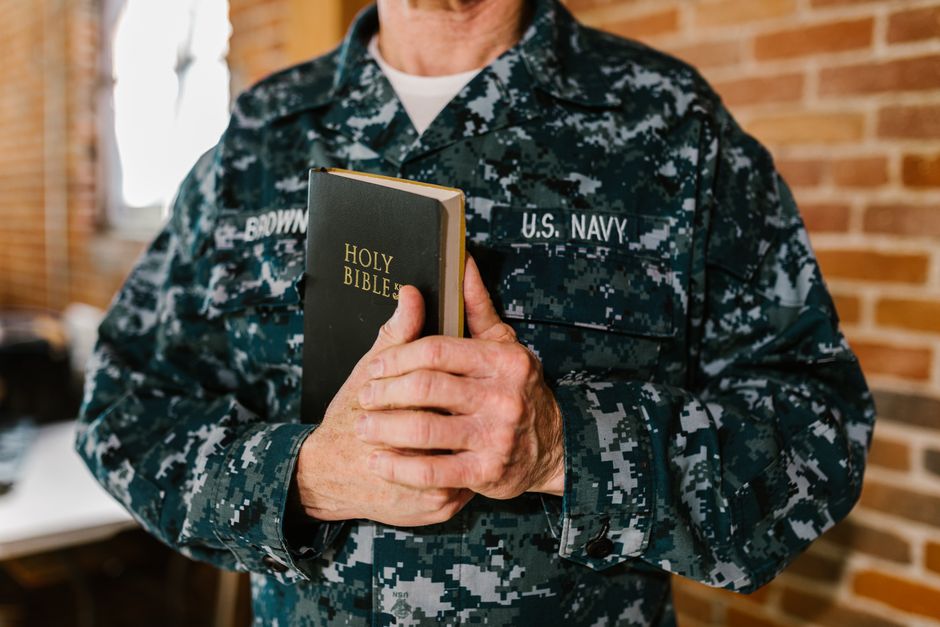
To learn how to become a hospital chaplain, build the required theological education, complete Clinical Pastoral Education (CPE), secure endorsement or recognition from your faith group, and meet the certification standards relevant to your target employers. Requirements differ: BCCI’s Board Certified Chaplain path calls for 72 graduate semester hours and four CPE units, while residency length, experience expectations, and hiring rules vary.
How hard is it to become a hospital chaplain?
Becoming a hospital chaplain is demanding because education, supervised clinical training, faith-group endorsement, and practical experience must fit together. The challenge is less about following one universal checklist and more about matching your pathway to the credential and employer you intend to pursue.
Use this sequence to make the process manageable:
- Check the destination first. Review hospital chaplain postings in the locations where you could work. Note whether they require board certification, a particular graduate degree, CPE units, or a stated plan to complete certification.
- Confirm educational fit. BCCI’s June 2025 standards require 72 graduate semester hours, a qualifying master’s degree, and chaplaincy-competency coursework for Board Certified Chaplain applicants. Its Associate Certified Chaplain applicants need 48 graduate semester hours. These are BCCI standards, not a blanket rule for every job.
- Plan for CPE. ACPE describes CPE as supervised, interfaith professional education involving ministry practice, pastoral supervision, peer learning, evaluation, and theological reflection. A single unit usually takes 10–12 weeks; year-long programs commonly provide three or four consecutive units.
- Arrange endorsement and experience. BCCI requires current faith-group endorsement or recognition, received or reaffirmed in the prior 12 months. It also requires at least 2,000 hours of chaplain work or volunteer experience after the required CPE units; documented volunteer chaplain hours may qualify.
- Apply for the relevant certification. Compare the credential’s education, CPE, endorsement, and assessment requirements before you invest time in an application.
These requirements make early research valuable. A degree that meets one organization’s standard may not satisfy another organization or a particular hospital, so confirm eligibility with the credentialing body and employer rather than assuming the labels are interchangeable.
Are hospital chaplains in demand?
There is no single national job-growth figure for hospital chaplains in the provided data. The Bureau of Labor Statistics reports on clergy broadly: it counted 262,000 clergy jobs in 2024 and projects 2,600 additional jobs from 2024 to 2034, a 1% growth rate. That category includes clergy beyond healthcare, so it cannot establish the outlook for hospital chaplains alone.
Certification can still matter in the hiring market. The National Association of Catholic Chaplains says most employers require board certification for full-time chaplain employment, while some may consider candidates with one or more CPE units who intend to complete certification. That distinction is practical: an entry-level opening may provide a route into the field, but it does not mean every full-time position will accept an applicant who has not completed certification.
For a grounded local picture, review current postings at hospitals and health systems where you might work. Track stated credential requirements, required experience, and whether the employer accepts candidates still completing CPE or certification. This gives you more useful decision data than treating the broad clergy outlook as a hospital-specific forecast.
How much does a hospital chaplain make per year?
The provided sources do not give a hospital-chaplain-only annual salary figure. The Bureau of Labor Statistics reports a May 2024 median annual wage of $60,820 for clergy broadly; that figure includes clergy occupations beyond hospitals and should not be presented as the specific median pay for hospital chaplains.
Pay comparisons therefore need a careful boundary. Use the BLS figure as broad occupational context, then check current hospital postings for the roles, regions, and credentials relevant to you. The sources provided do not quantify how location, experience, or certification change hospital chaplain pay, so assigning a dollar premium to any one of those factors would go beyond the available evidence.
Also compare the structure of training as you plan finances. NACC describes an intensive one-year residency as usually modestly compensated, and notes that CPE can also be completed through extended study over time. Residency offers concentrated clinical preparation; an extended route may spread training over a longer period. Contact individual centers for their schedules and fees rather than assuming all programs have the same financial terms.
How long does it take to be a chaplain?
There is no single total timeline because the answer depends on prior education, the number and pace of CPE units, experience requirements, and certification processing. ACPE says a unit usually takes 10–12 weeks, while a year-long program commonly includes three or four consecutive units; some centers offer part-time study.
Residencies add a concrete planning reference. Mayo Clinic’s Rochester CPE residency runs 12 months and provides three ACPE units. Each unit is approximately 13 weeks, followed by a one-month integration period; each includes at least 100 hours of didactic or group-process time and 300 hours of clinical work with patients, families, and staff. This is one program’s design, not a universal residency schedule.
Certification can add further steps. For NACC’s Board Certified Chaplain process, applications are evaluated through written materials and a three-person interview team; interviews are generally held 2–3 months after an approved application. Build your schedule backward from application windows and confirm the details directly with each program and certifier.
| Planning item | Published timing or threshold | What to confirm |
|---|---|---|
| ACPE CPE unit | Usually 10–12 weeks | Center schedule, format, admission dates, and fees |
| Mayo Clinic Rochester residency | 12 months; three units | Application window and program-specific selection requirements |
| BCCI Board Certified Chaplain experience | At least 2,000 hours after required CPE units | Which work or volunteer hours and documentation qualify |
| NACC certification interview | Generally 2–3 months after an approved application | Current application and interview schedule |
How to plan CPE and residency applications
Use ACPE’s directory to locate centers by state, then contact each center directly. ACPE says application requirements and schedules vary by center, and applications go to the center rather than through one centralized process. Ask about the interview timeline, program format, fees, and whether a part-time option is available.
Residency calendars can open well before the training year begins. Mayo lists September 1 through March 31 as its application window for the next program year and lists four students per year. Treat those dates as specific to Mayo’s Rochester program; verify current dates with any center you are considering.
Compare certification and endorsement requirements
Certification standards differ in both education and religious eligibility. BCCI’s June 2025 requirements set 72 graduate semester hours and four accepted CPE units for its Board Certified Chaplain applicants; its Associate Certified Chaplain applicants need 48 graduate semester hours and two units. BCCI also requires current endorsement or recognition from a faith group and qualifying chaplain experience.
NACC’s Board Certified Chaplain pathway is specifically for Roman Catholics or members of churches in union with Rome. It requires NACC membership at the Chaplaincy Ministry level, a CHEA-accredited relevant graduate degree with at least 32 credits, and four CPE units from an accepted provider. Its written assessment and interview are additional steps. This is not a direct one-to-one comparison with BCCI: faith eligibility, degree measures, and application assessments differ.
Endorsement is not a formality to leave until the end. BCCI requires it to be current within the previous 12 months, which makes coordination with your faith group part of application planning. Ask the relevant office what it recognizes, what documentation it issues, and how long renewal takes.
First steps if you are exploring chaplaincy
- Look at hospital chaplain postings in your preferred region and record the required degree, certification, CPE, and experience.
- Speak with a hospital chaplain or a chaplaincy program contact to understand the work setting and application pathway. Treat these conversations as information-gathering, not as a substitute for formal requirements.
- Ask local hospitals about volunteer opportunities and whether documented volunteer chaplain hours can meet a certification experience requirement.
- Use ACPE’s directory to shortlist centers, then ask each about schedules, admissions, fees, and application dates.
- Compare certification standards and speak with your faith group about endorsement eligibility and timing before selecting a degree or CPE sequence.
That order prevents a common planning problem: completing one stage before discovering that a target employer or certifier expects a different credential. The most reliable pathway is the one confirmed against actual postings and the standards of the organization you plan to join.
Frequently Asked Questions
Do I need a master's degree to become a hospital chaplain?
Often, but there is no single requirement for every hospital role or certification. BCCI requires a qualifying master's degree and 72 graduate semester hours for its Board Certified Chaplain applicants; its Associate Certified Chaplain pathway requires 48 graduate semester hours. Check the specific employer and certifying organization requirements.
How many CPE units do hospitals or certification organizations require?
The number depends on the credential and employer. BCCI requires four accepted units for Board Certified Chaplain applicants and two for Associate Certified Chaplain applicants; NACC requires four units for its Board Certified Chaplain credential. Some employers may consider applicants with one or more units who plan to complete certification.
Can I become a hospital chaplain without a seminary degree?
The sources do not establish one rule for every hospital position, and a seminary degree is not the only possible educational background across all pathways. BCCI specifies a qualifying master's degree and required coursework for its Board Certified Chaplain path, while NACC specifies a relevant graduate degree. Verify what your intended employer and certification body accept before choosing a program.
What should I do first if I want to apply for a hospital chaplain residency?
Compare local hospital postings with the education, endorsement, and CPE requirements of the certification you may pursue. Then use ACPE’s directory to find centers and contact them directly about admission requirements, schedules, fees, and interview dates. Apply to centers directly because their processes vary.
Sources
- U.S. Bureau of Labor Statistics, Occupational Outlook Handbook
- Board of Chaplaincy Certification Inc. (BCCI), Association of Professional Chaplains
- Association for Clinical Pastoral Education, CPE Students
- Mayo Clinic College of Medicine and Science, Clinical Pastoral Education Residency
- National Association of Catholic Chaplains, Board Certified Chaplain
- National Association of Catholic Chaplains, Choose Chaplaincy
You may also like

How Do I Represent Myself in Child Support Mediation?
Prepare for child support mediation with the right records, a clear view of guideline calculations, and an understanding of what may happen if talks stall.

Can I Challenge Legal Paternity and Child Support?
Learn how challenging a paternity acknowledgment differs from contesting a child support order, including deadlines, DNA evidence, and ongoing obligations.